


GMMs: Pandora’s box

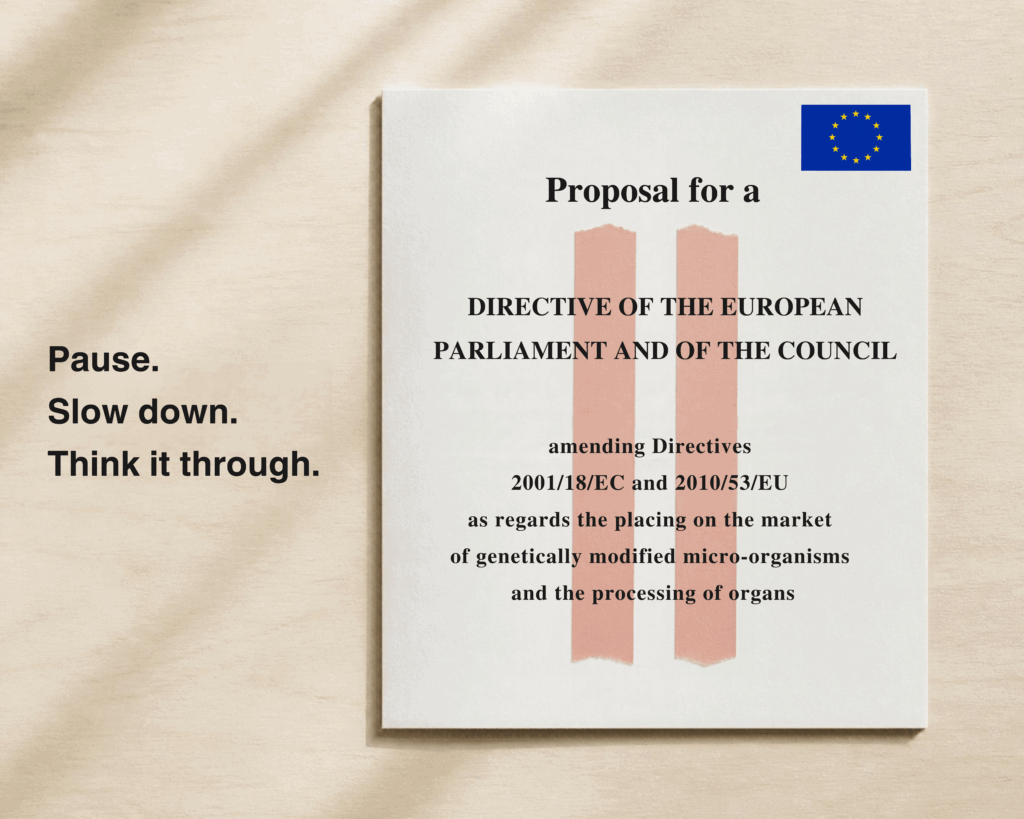
A new threat looms. Genetically modified micro-organisms (GMMs) are now also set to be deregulated. Members of the European Parliament and various specialist media that take a critical view of genetic engineering are sounding the alarm. Following the deregulation of genetic engineering (GMO)/ new genetic engineering (NGT), the European Parliament is now debating a new legal framework for the release of genetically modified micro-organisms. Bacteria, fungi or viruses, which until now have only been cultivated in contained systems or laboratories, are to be released ‘unprotected’ into the environment. Micro-organisms behave fundamentally differently from plants: they reproduce much more rapidly, spread over long distances and continuously exchange genetic material across species boundaries. Experts warn that authorising their unrestricted release will open Pandora’s box. Serious, scientifically proven risks to the environment and human health are being raised as causes for concern.

The nearly two-year campaign by the organic and non-GM sectors to ensure that existing EU rules on genetic engineering (labelling, risk assessments, etc.) also apply to New Genetic Techniques (NGT) ultimately proved unsuccessful – following an agreement in the trilogue, the Commission’s proposal for deregulation was approved by Parliament by a narrow majority. The new regulations will come into force in 2028. However, another proposal from the European Commission – the Biotechnology Act, which the EU bodies are now discussing – is at least as serious, and probably far more dangerous. Although the proposal has been on the table for a year and the Council of Ministers and Parliament’s Environment Committee have already taken a stance, few are aware of the EU’s plans to promote the release of genetically modified microorganisms (bacteria, viruses, archaea, microalgae, fungi) into the environment and to relax safety regulations and transparency requirements, warns Benny Haerlin of Save our Seeds (SOS). Among other things, the proposal involves the removal of the obligation to renew authorisation after ten years. Furthermore, the requirements regarding risk assessment and analytical detection are to be relaxed, and a new category of so-called ‘low-risk GMOs’ is to be created, for which the regulatory requirements could be further relaxed, reports SOS.

Microorganisms are complex and often ‘terra incognita’
Haerlin writes: “Microorganisms are the oldest and by far the most diverse forms of life. We are all dependent on them and – like every organism – possess a complex microbiome that accounts for around half of all our cells. However, microorganisms are probably the largest area of ‘terra incognita’ in biology. We know only a small percentage of them and understand very little about their interactions and functions. What we do know is that they exchange genetic information on a large scale, reproduce within minutes, and their impact on health and the environment can be enormous.” When microorganisms establish themselves in open ecosystems – including our own bodies – they can persist there, regardless of whether this is intended or not. Haerlin is calling for support for an appeal by scientists to the EU institutions, urging them to observe the precautionary principle. (Link)
Concerned scientists warn of the consequences and call for safety regulations

In a webinar organised by MEPs Marta Temido (S&D) and Martin Häusling (Greens), the scientists – Prof. Gabriele Berg of Graz University of Technology, Dr Stephanie Jurburg of the Helmholtz Centre for Environmental Research, Prof. Katja Tielbörger of the University of Tübingen and Dr Christoph Then of Testbiotech – explained the interrelationships and outlined the risks and dangers. A recording of the webinar can be found here: https://www.martin-haeusling.eu/termine/webinar-gentechnisch-veraenderte-mikroorganismen-chancen-und-risiken
Marta Temido is the European Parliament’s rapporteur for the proposal for a new directive on the placing on the market of genetically modified organisms, known as the Biotech Act. She advocates unconditional and strict adherence to the precautionary principle in biotechnology and genetic engineering, as well as transparency and accountability, with the aim of ensuring a high level of protection for human health, animal health and the environment.
Martin Häusling, the Greens’ lead negotiator on the Environment Committee, welcomes key improvements in the recently adopted opinion of the European Parliament’s Environment Committee on the European Commission’s Biotech Act I, but still sees significant areas for criticism regarding regulatory simplification. He comments: “Europe must reconcile innovation and protection in the field of biotechnology. The Biotech Act must not become a deregulation bill. New technologies can offer enormous opportunities – but they must be safe and must not come at the expense of the environment, animal welfare or human health.”

Professor Gabriele Berg, a scientist at Graz University of Technology, concurs: “We commissioned a risk-benefit assessment for GMMs and surveyed 200 experts from the fields of microbiome and environmental sciences at universities, research centres and in industry; half of them recognise the potential, but 94 expressed serious concerns regarding ecological risks and uncertainties.” It is clear that microorganisms are far more dangerous than transgenic plants. Their behaviour in ecosystems remains largely unexplored, and once they are released, it is difficult, if not impossible, to retrieve them.
Safety and sustainability must be the priority
Prof. Katja Tielbörger, University of Tübingen, urges: “Safety comes first. Once we have developed these methods, they should be applied on a case-by-case basis to assess the environmental risks and benefits of these microorganisms before assigning them to categories such as QPS, ‘low risk’ or ‘genetic concerns’. The next step: sustainability. Only if there is no risk, many benefits are to be expected and, most importantly, there are no better alternatives – only then should authorisation be granted.” Tielbörger helped launch the appeal to the EU institutions (link).
Further information is available on Martin Häusling’s website https://www.martin-haeusling.eu/themen/agrarpolitik/agro-gentechnik
Further genetically modified Bacillus thuringiensis products, one from the German company BASF and one from the Chinese company Wuhan Keno Biotechnology Co.
Further information is available on Martin Häusling’s website https://www.martin-haeusling.eu/themen/agrarpolitik/agro-gentechnik
Further genetically modified Bacillus thuringiensis products, one from the German company BASF and one from the Chinese company Wuhan Keno Biotechnology Co.
Author: Karin Heinze, BiO Reporter International


Comments